Thursday, 15 April 2010

The Public - West Bromwich


The Public is probably one of the best galleries I have ever been too.It is the biggest advertisement for participatory art that i think i have ever seen.

It was just wonderful. Everywhere you turn in to gallery there is something to participate and interact with.


According to the LOTC website,
"Learning experiences outside the classroom are often the most memorable, helping young children to make sense of the world around them and intergrate new experiences and understandings into all aspects of their formal and informal learning" (LOTC, online, 2009)


The public definitely provided opportunity for this.

Here is Jaz testing out our favourite thing of the day. One person selects a picture from an arrangement of images and a giant projector puts it on the screen. Many silly poses were created as well as ingenious and creative ones too.


Einstein once said Imagination is more important than knowledge.


Myself having a go.
Posing with the art.
There were many interactive art packages around the gallery and some were connected to giant screens. It was exciting exploring and getting hands on with what the packages had to offer.


Jaz exploring
Pacman inspired :)

It is the perfect opportunity for children to explore, create, investigate,engage, interact, play,and experiment and this is what I feel art is about.Definitely a creative environment.

This supports,
Duffy,B(1998)
"Creativity does not exist in a vaccum"(Duffy, 1998, p18)

It would be essential to go here before taking children here however, and decide what you would like the children to focus on.

Clement (1993) believes
"Gallery visits must be made for real purpose. Open - ended visits can easily result in the children achieving little more than visual indigestion" (Clement, 1993, p188)


References
Clement, R. (1993) The Art Teachers Handbook. Second Edition. Stanley Thornes Publishers Cheltenham.
Duffy, B(1998) Supporting creativity and Imagination in the Early Years. Open University press. Buckingham.

LOTC (2009) WWW.lotc.org.uk (online)

Bridget Riley - Flashback


Bridget Riley is known for her optical art. and creating a variety of geometric forms that produce sensations of movement.

She has been going strong since the 1960's.So when her exhibition came to BMAG's Waterhall, it was a must to fit it in to our gallery trips for that day.

I must admit, I wasn't overally keen, and after spending about ten minutes in the exhibition I felt like I had the greatest headache ever. Greatest in a negative sense that is. But as we started to walk around the show, apart from the movement that each piece conveyed it also opened up my eyes to vast amount of preparation and mathematical precision that went into composing each piece in order for it to be a success.

Riley presents some of her work in a way that shows her progression. She indicates measurements and shows the viewer just how the optical illusion was constructed. It felt a bit like that show on television 'the masked magician' where the trick is shown and then the conjurer takes you step by step how the whole thing was constructed.This a key element to implement into teaching and particularly in terms of assessing art.

Koster (2009) agrees saying,
" Teachers must find ways of recording and presenting not just the final static product, but the whole process of creation" (Koster, 2009, p67)

This to create a broadened understanding of the stages of work passed through, how the children worked and the children's perceptions of their work.A key part of assessment in art.A great way to collate this information is through the use of sketchbooks and art journals. It is a personal way for a child to record their art journey.
Wyatts and Cox(2007)believe in the value of sketchbooks,
"The sketchbook is invaluable for children of all ages, to help them and the teacher with assessment"(Wyatts and Cox,2007, p12)

In my opinion her work it conveys an element of problem solving.
Because of this Torrance (1970) would consider this part of a creative process as his definition suggests creativity is concerned with,
"An ability to see a problem, form an idea to solve it and share the results"(Torrance, 1970 in Koster (2009) p30)

It features some of Riley's most iconic work.


Movement in squares 1961.The painting that Riley credits as the beginning of her breakthrough of abstraction.

In the early 1960s it was said that Riley's work induced variations of movements into viewers as varied as seasickness.
Riley is MOST famous for her black and white images but in the 1980s she began experimenting with colour.

In some works, lines of colour are used to created a shimmering effect, while in others the canvas is filled with tessellating patterns.


Shadow play (1990)

I think overall the exhibition changed my perception of Riley's work and it is definitely worth a look. You can not explain or represent in images the way each picture makes you feel when you walk past it. It is definitely a sensory experience, one that can only be experienced when exploring the art first hand. Supporting evidence for visiting galleries.
Beal indicates the importance of visiting galleries.

"They (galleries) can be a wonderful learning experience for children. it is important that children see real work whenever possible - work that artists have actually made as opposed to looking only at reproductions" (Beal,2001,p207)


References

Beal, N with Miller G,B.(2001) The art of teaching art to children. Farrar, Straus and Giroux. New York.

Wyatts R, Cox, S (2007) Teaching art and Design 3-11. Reaching the standard Series. Continuum International.

Koster, J, B. (2009) Growing Artists. 4th edition. Teaching the Arts to Young Children. Delmar. Cengage Learning.

http://www.bmag.org.uk/events?id=557

Torrance, E. P (1970 in Koster, J, B. (2009) Growing Artists. 4th edition. Teaching the Arts to Young Children. Delmar. Cengage Learning.

Clare Rojas. We They, We They


Clare Rojas.
We They, We They
Installation, Ikon, 2010
Photo: Stuart Whipps


This is long overdue a write up, myself, Jaz and Vanessa went spontaneously one day a few weeks back.

Clare Rojas - We they, We They IKON.

Clare Rojas incorporates comic like features along with folk art.

She produces ironic images that play on gender representation, where the male featured can be seen as the object of a critical and mocking gaze directed at him by the female.

I can't say I overally 'liked the exhibition as the artists style was not one that i have a preference for. I do like the humour and the way she used iconography from fables and tales in her work.I also like the way the pieces of work were all seperate pieces of work in their own right but they had been arranged in a patchwork like composition that joined all of the aspects into one large scale piece.


Because of a spur of the moment adventure, i had no camera, so i shared Jaz's camera and he still let me be snap happy. Thank you Loveleh :)
Some of the work was pleasantly themed whilst other pieces conveyed a more sinister composure, with features such as bleeding eyes.
Architecture and people morph into increasingly abstracted conglomerations of pattern while evoking a range of symbolic associations.


Tuesday, 6 April 2010

:)

I am finally up to date with my blogging. 11.52PM. TEN entries for the day and a full scale photo and ball adventure later.

Knackered.


BED

Pitt Rivers- University of Oxford.

Anthropology and World Archaeology

For, me the Museum showed amongst it's vast collections...

Tolerance


Diversity

Uniqueness

Culture


Beliefs


History

Progression


Again i was enthralled, hence the lack of photography, particularly with the tribal custom section. With scarification, tattoos, neck elongation etc. I enjoy learning about others beliefs and cultures.


Link to Museum Website


Oxford University Museum of Natural History

There was so much to see at this museum I actually felt bad. I was so engrossed in all the bones and stuffed animals, I took hardly any pictures. But it really was for me like 'a night at the museum'. The up close and personal encounters were great. It felt like anything could just come alive, like it was purely frozen in a moment.The dinosaurs were my favourite. They were HUGE


Some of the rare photographs from the trip.


Link to Museum Website

Mary Stevens Park - Urination.


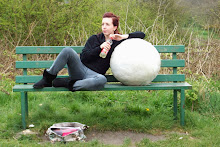
This image was taken momentarily before a dog came and urinated up the side of my ball. Wonderful.


Me retrieving the ball. Notice the joyful expression.


The substance. Only slight, to my relief.


A bit of hand wash should do the trick until we get back to the car. I was thankful that such a small surface area was covered of such a large space. Thank goodness for easy clean plastic materials.